 •
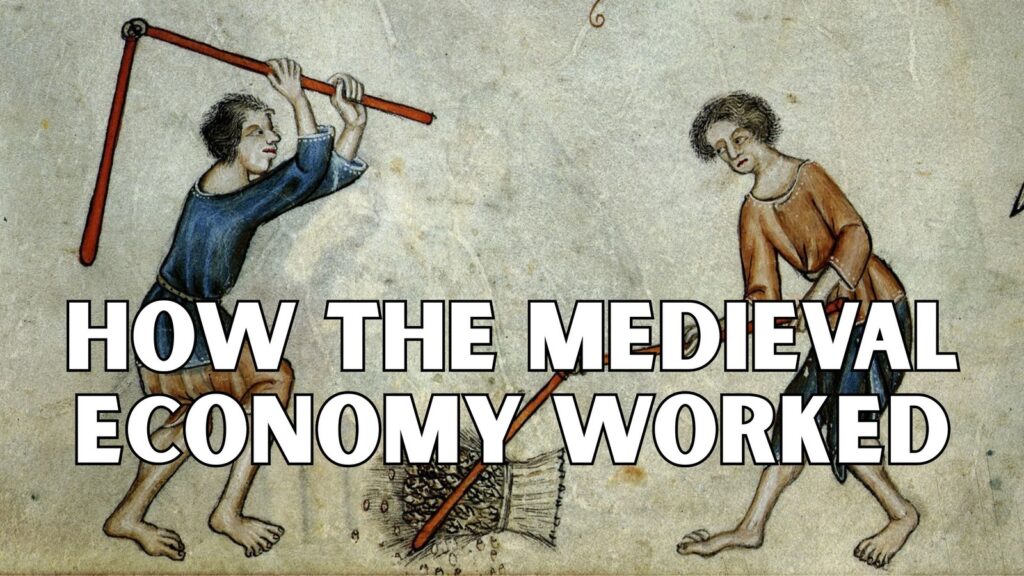
•The renowned historian Chris Wickham, in his 2021 article “How Did the Feudal Economy Work? The Economic Logic of Medieval Societies” published in the journal Past & Present, examines how medieval economies functioned, the critical role of peasants in this development, and why centuries of economic growth did not automatically lead to capitalism. Wickham is known to have recently passed away.
This peasant-landowner relationship was, according to Wickham, a defining feature of feudalism. He uses the term in a very economic sense, rather than in the political sense of the relationships between kings, nobles, and vassals that it is usually associated with.
Wickham places great importance on northern and central Italy, one of the most economically developed regions of medieval Europe. From the late 12th century, cities such as Milan, Genoa, Venice, and Florence experienced significant commercial and industrial expansion. These industries were based on extensive trading networks. Italian merchants imported wool from Castile and England, after North Africa, and cotton from Sicily and the eastern Mediterranean, while wheat was brought to the growing populations of northern Italian cities, which could no longer feed their populations solely from the surrounding countryside. Banking and credit also expanded; Italian financial institutions eventually lent money to rulers across Europe.

This did not mean that medieval rural society was peaceful or equal. Landowners could impose new burdens with difficulty; Wickham gives examples from France, Italy and Spain, where the expanding landowning authority increased the burdens on rural communities. The development of more restrictive forms of slavery in parts of Eastern Europe also showed how landowners could strengthen their control over agricultural labour.
When these peasants took advantage of commercial opportunities, their land could become more secure, reducing their risk of losing their property and becoming dependent on wage labour. Thus, commercial growth did not necessarily lead to capitalism. When trade contracted, peasants were often able to produce more for their own consumption. This flexibility allowed the medieval economic systems to survive periods of growth and decline without fundamentally altering their structure.
Wickham further developed these arguments in his 2023 book, The Donkey and the Boat: Reinterpreting the Mediterranean Economy, 950–1180. Published by Oxford University Press, the book offers a comprehensive comparison of the economies of Egypt, North Africa, Sicily, Byzantium, Islamic Spain, and northern and central Italy. Based extensively on archaeological and written evidence, Wickham argues that regional economic developments—including the purchasing power of peasants—were more important than long-distance trade alone in shaping Mediterranean prosperity. As a comprehensive expansion of the ideas explored in the article, the book shows how peasant-landowner-market relations shaped economic development in the medieval Mediterranean. This approach reflects much of his broader work, including challenging familiar historical assumptions, comparing totals across geographical boundaries, and understanding the structures of everyday life beyond the king and political institutions.

























Inga kommentarer ännu