 •
•According to a report published on the site, the pre-historic period of Native Americans dates back decades, and research suggests that prehistoric humans have been in the Americas for much longer than most experts believe. On Indigenous Peoples Day, seven regions in the United States stand out for their stories of Native Americans.
1. Chaco Canyon (New Mexico)
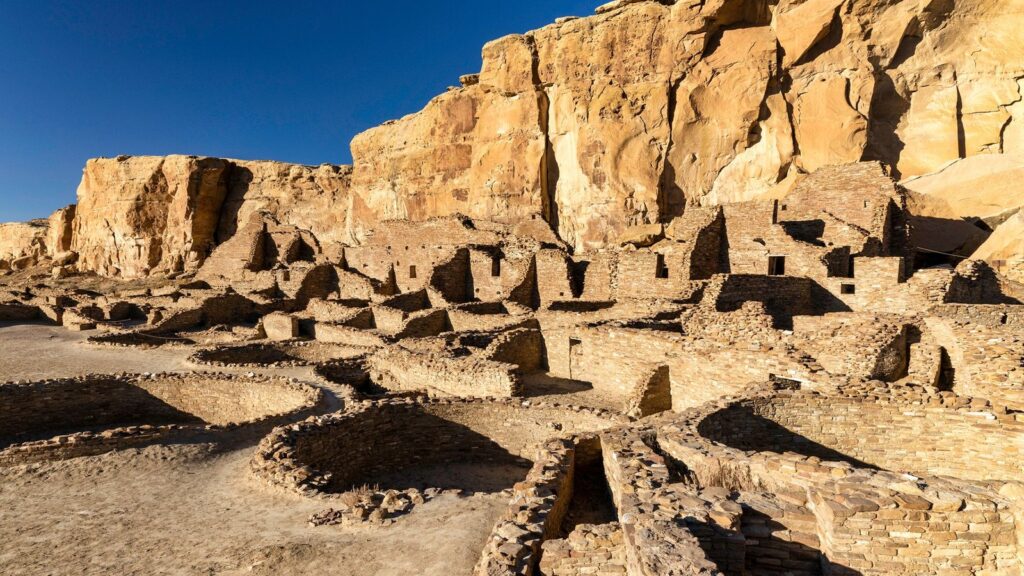
This settlement, which was founded many years ago, may be named after the Spanish word for “Native” in the region, and was the center of the Old Pueblo people between approximately 850 and 1250 AD. At its heart is Pueblo Bonito (“Beautiful Village”), a four-story stone structure with more than 600 rooms and 35 underground ceremonial chambers called kivas.

Experts estimate that the builders of these complex structures transported more than 200,000 wooden logs from distant mountains, which were used to reinforce buildings made of blocks of sandstone. The town was once at the center of trade routes stretching more than 400 miles (640 kilometers), and excavations of imported Mexican parrots and cacao confirm trade with distant regions.
2. Cahokia (Illinois)
Cahokia was the largest Native American settlement in northern Mexico, and in 1100 AD it housed 40,000 people — comparable in size to major cities in the Middle Ages in Europe. Strobel, a historian and Native American historian at the University of Massachusetts Lowell, told Live Science: “It’s an incredibly important site.”
There, people lived in houses called “wattle and daub” — a frame of sticks plastered with clay or mud — along with large circular fields, wooden palisades, and dozens of ceremonial earthen mounds. The native people even carried a 5-ton (4.5 metric tons) tree and turned it into a marker known as the Mitchell Log. According to excavation studies, many people from far away also visited to attend ceremonies. The area now includes a park and a “woodhenge” of wooden circles that follow sunrises and sunsets, along with a reconstructed Monks Mound, a 100-foot (30-meter) high earthen structure. Strobel thinks Cahokia may have been the most important site in the United States before the colony.
This area preserves cliff dwellings built by the Kuzay Sinagua people between A.D. 1125 and 1250. People can reach the site by walking along a deep sandstone and sandrock canyon about 10 miles southwest of Flagstaff. The cliff dwellings were built in natural caves within the sandstone; this provided them with insulation from cold and heat, and their high positions on the canyon floor served as a defense. Strobel said that Walnut Canyon is a lesser-known site, but it is an extraordinary example of Native Americans who, despite relatively dry conditions, carefully managed water. Those who lived in the caves grew crops on the flat land at the edge of the canyon, but they drew water from the stream at the base of the canyon to fill their cisterns.


























Δεν υπάρχουν σχόλια ακόμα