 •
•
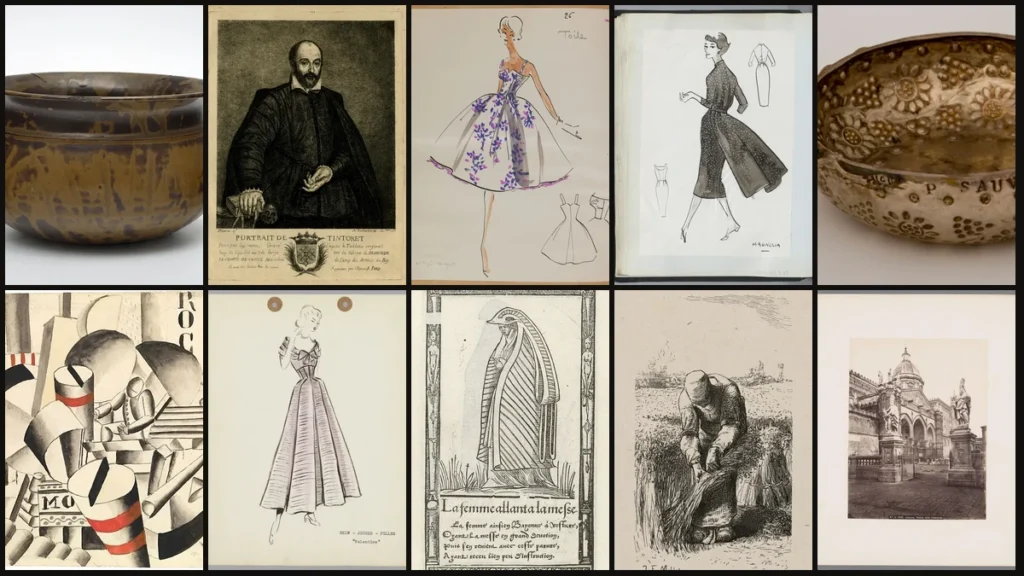
The second half of the 19th century was a period in which artists in France, disillusioned by the mass production brought about by the industrial revolution, sought a return to craftsmanship and the medieval tradition of craftsmanship. Jean-Joseph Carriès (1837-1894) grew up in a porcelain workshop in Paris, but turned away from factory discipline and began to seek a free form in his own workshop. This period was one in which the seeds of Art Nouveau were being sown, and names such as Jean-Louis Forain and Eugène Manet were also involved in the same rebellion. Carriès received great acclaim for his works at the 1878 and 1889 World Exhibitions; but due to commercial failure, he narrowly avoided bankruptcy. The Flare porcelain technique was part of a search that was being revived in France at the time and spread from the royal workshops to the homes of the people. This vase, produced as a nostalgic rebellion against industrialization, reflects the spirit of that period.
This vase by Carriès was produced using a special porcelain technique known as ‘flar’. In this technique, the porcelain clay is shaped into forms with walls that gradually become thinner, almost paper-thin, creating a translucent surface that shines like glass. The palette of the work consists of soft, eye-catching tones favoured at the time: from light green to blue, pink and purple, sometimes combined with metallic glaze. The composition features organic and floral forms, with branches, leaves and flowers flowing together in a natural rhythm, creating a lively rhythm. These organic elements symbolise the longing for the pure beauty of nature in contrast to the industrialised world, while the thin porcelain walls are interpreted as a metaphor for fragility and transience.

Jean-Joseph Carriès is considered one of the pioneers of Art Nouveau in art history, and this vase is one of the first examples of the movement’s fundamental principles. In a parallel line with the Arts and Crafts movement, which advocated the integration of art into everyday life, Carriès fought to elevate craftsmanship to the status of art. The contribution of this vase to the present day is to remind us of the value of handmade craftsmanship and the pursuit of free form in modern design. Today, these vases, which are exhibited in museums, are a crucial document for understanding the art philosophy of the late 19th century and are considered one of the turning points in the history of design.

The mid-18th century was a period of intellectual revival in Europe, with art and science, philosophy, and literature intertwined. During this period, interest in the works and biographies of the Renaissance masters, particularly the great names of the Italian Renaissance, Tintoretto, Titian, and Michelangelo, gave rise to a new mass-market literature. Tintoretto’s (1518-1594) distinctive dynamic brushstrokes and dramatic use of light continued to captivate art historians and collectors centuries later. In 1755, engravers sought to bring these works to a wider audience by copying the portraits of the Renaissance masters. This work, as a gravure inspired by Tintoretto’s original self-portrait, reflects the period’s passion for art history and admiration for the Italian Renaissance. The arms and initials of Comte de Vence indicate that the work was part of an aristocratic collection and that artworks were a status symbol among the nobility at the time.
This work is a commentary on a 1755 engraving, derived from Tintoretto’s original self-portrait. The engraving technique is known for its fine lines and meticulous tracing work, which adds sharp detail and depth to the piece. In the composition, Tintoretto is depicted in a three-quarter-length pose, looking forward; his right hand is resting on a book. This book symbolizes his intellectual depth and the intelligence and erudition that characterize his art. The facial expression conveys a thoughtful and confident demeanor, which aligns with the ideal of intelligence and creativity attributed to artists of the period. The color palette consists of monochromatic tones, as is typical of engravings; however, the interplay of light and shadow adds dramatic depth and volume to the work. The arms of Comte de Vence and the initials on the frame emphasize the work’s ownership and aristocratic context, indicating that it is not merely a work of art, but also a status and cultural display object.
This work is an important document in art history, demonstrating how the works of Renaissance masters were rediscovered and disseminated in the 18th century. The interpretation of Tintoretto’s self-portrait as an engraving provides access to Italian Renaissance art for artists and collectors of the period. The work reflects the integration of art and science in the Enlightenment, while also illustrating the role of the engraving technique in making artworks accessible to the masses. As a contribution to our present day, this work is valuable as a historical version of Tintoretto’s portrait, helping us to understand the perception of Renaissance art in the 18th century. For art historians, works such as these are important for understanding how a work was transformed and re-produced in new contexts.
1957 Carven Rose and Violet Rose Motif Robe à Bretelles: A Documentary Piece from the Golden Age of French Fashion

1957, Fransız modasının yeniden parladığı, post-savaş döneminin ferahlığı ile Haute Couture'nin lüksü arasında bir denge kurulan bir yıldı. Paris, savaştan sonra giyimde küresel bir başkent olarak yeniden iktidarını ilan etmiş, Dior'un New Look mirasından beslenen kadın silueti, zarafeti ve şıklığı yeniden tanımlamıştı. Bu yıllarda Paris'in salonları, yani lüks atölyeleri, iş kadınlığı ile avangart estetiği arasında gidip gelen, hem günlük hem de törensel giyimi yeniden kurgulayan tasarımcılarla doluydu. Carven markası, bu dönemin modern, pratik ama yine de kadınları zarif gösteren giyim anlayışının öncülerinden biriydi ve bu eser, o dönemin sosyo-kültürel ruhunu yansıtan bir belge niteliği taşır. Robe à bretelles, yani askılı elbise, o çağın kadınlarının özgürlük ve modernlik arayışının bir yansımasıydı; omuzları açık, hareket özgürlüğü sunan bu kesim, hem spor hem de şık bir görünüm arayan 1950'ler kadını için idealdi. Bu elbise, o dönemin kadın kimliğinin dönüşümünü, hem iş hem de sosyal hayat arasında dengeli bir yaşam tarzını temsil eder.
This work stands out for its documentary photography and archival documentation technique, with its realism of textures and cuts. The rose and violet rose motifs, printed or transferred onto the fabric, create a soft and saturated color palette; the harmony of pink and purple symbolizes both the soft and bold aspects of femininity. The strapless design of the Robe à bretelles subtly emphasizes the body lines by bringing the shoulders and neckline forward; the harmony of vertical and horizontal lines creates a balanced rhythm in the composition. Rose motifs have historically represented love, beauty, and the transience of life (memento mori); this dress carries this layered meaning with a modern interpretation. The texture of the fabric, the reflection of light, and the details of the cut give the work a documentary honesty while also preserving the aesthetic values of the fashion of the era.

1957, Fransa için hem ekonomik hem de kültürel açıdan dönüm noktası bir yıldı. İkinci العالم Savaşı’nın yıkımından sonra başlayan “Güzel Çağ” (Les Trente Glorieuses) olarak bilinen bu patlayıcı ekonomik büyüme dönemi, Fransız lüks tüketiminin ve moda endüstrisinin yeniden canlanmasına zemin hazırladı. Jacques Heim, 1920’lerden itibaren Paris’in haute couture sahnesinde, özellikle lüks ev tekstili ve pırpırlı gece elbiseleriyle tanınan, Coco Chanel’in rakibi sayılan köklü bir evdi. 1950’lerin sonuna gelindiğinde Heim, modern yaşamın hızlanan ritmine uygun, daha rahat ve çağdaş bir lüks vizyonunu temsil ediyordu. Magnolia adlı bu eser, tam da bu dönemin burjuva yaşam tarzının, ev içindeki zarafet arayışının ve Paris’in hala dünya modasının kalbi olma iddiasının bir yansımasıdır. Atölye üretiminin ve el işçiliğinin önemi korurken, Heim’in eserleri aynı zamanda sanatsal yaratıcılığın endüstriyel üretimle buluştuğu bir dönemin izini taşır.
Magnolia is a testament to the integrity of documentary photography through the technique of lithographic printing. Lithography is a printing technique that works on a flat and smooth surface based on the principle of the repulsion of oil ink against water, and this work highlights the tonal richness and soft transitions offered by this method. The color palette balances the green tones of the maple leaves with the cream-white and soft pink tones of the magnolia flower, reflecting the calm but luxurious atmosphere of the French aesthetics of the late 1950s. In the composition, the organic, symmetrical but natural curves of the flower blend with the geometry and the order of modern life. The magnolia flower has historically been used as a symbol of desire, grace, and femininity; Heim combines this symbol with the ideal of beauty and delicacy idealized for the woman of the era. The work is not only a depiction of an object, but also a visual manifesto of a philosophy of life.
Jacques Heim’s Magnolia is an important document of the intersection of post-war luxury design and fashion and home living. Although overshadowed by Coco Chanel in art history, Heim made a significant contribution to the French design heritage by developing a unique language in the fields of luxury textiles and couture. This work brings the aesthetic values of the late 1950s, the artistic possibilities of the lithographic printing technique, and the place of symbolic motifs such as the magnolia in visual culture to the present day. Today, Magnolia stands out as a valuable archival document that captures the spirit of the era, both aesthetically and culturally, and reminds the modern viewer of the human, graceful face of French luxury.
Şarabın Sessiz Şahidi: Fransız Saraylarında Bir Tadım Kadehi

This glass is a reflection of the drinking culture that was at the heart of aristocratic and courtly life in France. In the 17th and 18th centuries, in palaces such as Versailles, wine was not just a drink, but also a means of status, hospitality, and diplomatic relations. At banquets held in royal and noble circles, the material and craftsmanship of the glasses reflected the owner’s taste and social position. This period was one in which artisans and craftsmen worked in the royal workshops, and the production of luxury items was supported by the state. Wine culture became an integral part of the lifestyle of the nobles, especially as the importance of the vineyards in regions such as Bordeaux and Burgundy grew. This glass is likely to have belonged to a palace or a noble family’s collection, and it reflects the socio-cultural values and aesthetic understanding of the period.
The glass is a work of art crafted by the leading glass and metal craftsmen of the era. It is usually made of thin, transparent glass with decorations made from precious metals (silver, gold, or brass). The handle and base of the glass are shaped with the symmetrical and elegant proportions favored at the time. The color palette consists of a transparent and smooth glass tone that complements the color of the wine, while the metal decorations sparkle in gold or silver tones. The composition has a balanced and harmonious symmetry around a vertical axis. Symbolically, the glass is a symbol of hospitality and friendship; it is also associated with blood and sacredness in Christianity. The finishing or geometric motifs in the decorations are a reflection of the artistic understanding of the era.

The year 1918, which marked the end of the horrors of World War I, was a time of reconstruction in Europe, and especially in France, with a surge of enthusiasm for the machine age. While working as a painter in Paris after the war, Fernand Léger was nourished by the industrial and technological boom that had erupted. After the war, urbanization, factories, railways, and shipping were at the center of artists’ interests. Léger reflected the energy of this new era in his works, bringing the power of the machine and the dynamism of modern life into art. The work entitled The Tugboat (recto); Related sketch (verso) is a reflection of the dream of this period, a reflection of the admiration for the aesthetics of the machine, as a manifestation of the new age. Léger’s studio was the center of a creativity that was nourished by industrial objects and the possibilities offered by modern technology during this period. The artist believed that even the ordinary objects of everyday life could be transformed into a high expression of art.
In this context, an industrial watercraft such as a steamboat was a symbol of the modern era for Léger, and by incorporating this object into his work, he offered a tribute to the machine age. Léger’s approach heralded a new vision in the art world of the time, representing the interweaving of art with social change.
The work, produced using the techniques of lithography and printing, clearly demonstrates Léger’s interest in machine aesthetics. Sharp lines, geometric forms, and mechanical structures are prominently featured in the composition of the work. The color palette features a predominantly cold-toned and metallic-looking palette, which adds an industrial atmosphere to the piece. Léger often incorporated the tendency to combine machine parts with the human body in his works, which enriches the symbolic layers of the piece. A vessel, such as a tugboat, is depicted as a symbol of power and movement, reflecting the dynamism of the modern era. The related sketch on the verso side of the work draws attention as part of the artist’s creative process and provides an opportunity to follow the development stages of the piece. Léger’s technical approach in this work reflects his understanding of accepting the beauty of the machine as a part of art. The work is not merely a depiction of a marine vessel, but also an expression of admiration for the machine age and the energy of modern life. In this context, the work is considered an important example of Léger’s artistic philosophy.
Fernand Léger’s work, “The Tugboat,” holds a special place in art history as one of the significant examples of machine-age art. Léger, along with Pablo Picasso and Georges Braque, contributed to the development of Cubism, but developed his own unique style of “mechanical Cubism.” This work is considered an important example of the integration of machine aesthetics into art and demonstrates the courage of artists to combine art with modern technology. Léger’s approach has influenced subsequent generations, contributing to a rethinking of the relationship between art and technology. Today, the work serves as an important document in understanding machine-age art and the concept of modernity. Léger’s works are preserved in museums and archives as part of this important period in art history and are passed on to future generations. The work also reminds us that art can be not only an aesthetic, but also a social means of expression, as a reflection of the artist’s response to social change.
Jacques Heim’s 1948 Valentine’s Day: The Renaissance of Fashion and Luxury After War

1948, Fransa için bir dönüm noktasıydı; İkinci العالم Savaşı’nın yıkıcı yıkımından yavaş yavaş toparlanan Paris, moda ve lüks sanatlarının yeniden dünyaya açıldığı bir döneme giriyordu. Savaşın getirdiği kısıtlamalar ve kıtlık döneminden sonra, Fransız haute couture yeniden parlayacak ve Paris’in dünya modasının kalbi olma unvanını geri kazanacaktı. Jacques Heim, bu dönemde Fransız modasının öncü isimlerinden biriydi; 1920’lerden itibaren modernist estetiği giysilere taşıyan, geometrik formlar ve soyutlamalarla tanınan bir tasarımcıydı. Heim’in atölyesi, Paris’in lüks moda sektörünün kalbinde yer alıyordu ve o, sanat ile modanın kesişiminde çalışan nadir isimlerden biriydi. 1948 Valentine’s, bu yeniden doğuş döneminin bir yansıması olarak, savaş sonrası toplumun umut, güzellik ve yaşam arzusunun bir ifadesi niteliğindeydi.

The mid-16th century in France was a period of cultural explosion under the Valois dynasty, with the spread of Renaissance values from Italy to the rest of Europe. François Desprez, a French painter of Bayonne origin, created this work in 1562, coinciding with the onset of the Wars of Religion (Huguenot Wars) in France. At this time, conflicts between Catholics and Protestants were deeply affecting all layers of society. The title ‘Woman from Bayonne: Pilgrim to the Mass’ depicts a woman’s journey to worship in an era where religion was central to daily life. Bayonne, a city in the French Basque Country near the Spanish border, reflects the region’s local identity and the people’s religious life. The artist has carefully depicted the socio-cultural atmosphere of the period, the impact of religious ceremonies on everyday life.
This work was probably created in oil on wood panel or canvas. With the common oil painting technique of the period, Desprez layered the colors to create depth and volume, using light and shadow to give the figure life. The color palette is in harmony with the earthy tones and dark backgrounds common in French art of the period, and the vibrant colors in the woman’s clothing stand out. In the composition, the woman’s walk along the path creates a sense of movement and direction, while the objects in her hand or on her shoulder (perhaps a book or a religious object) have symbolic meaning. The expression and posture of the woman reflect faith, devotion, and the ritual of worship, which is a part of everyday life. The symbols in the work allow us to read the religious and cultural values of the period, especially through the figure of the woman, as a symbol of faith and virtue.
This work by François Desprez makes an important contribution to the regional and religious-themed production of French Renaissance art. The fact that it was created in the shadow of the Religious Wars adds historical depth to the work, while it also serves as a valuable document about the daily life and religious world of the period. In art history, this work is considered an important example for understanding the local and religious dimensions of French art, which was shaped by the influence of Italian Renaissance art. The work, which has survived to the present day, is exhibited as a public property in museums and conveys the cultural and religious atmosphere of 16th-century France to visitors. In this sense, the work is preserved as a valuable heritage both historically and artistically.
The Fabric Touched in 1853: The Silent Epic of the Working Woman in Jacques-Adrien Lavieille’s “Woman Weaving Flax”

In 1853 France, the influx of laborers into the city and the shadow of industrialization were increasingly making the labor of women visible. Jacques-Adrien Lavieille’s work, as a product of the workshop and museum culture of the time, reflects the effort to bring the daily labor of working women to the high plane of art. Linen, which was both economically and culturally important in that era, formed the backbone of the textile and silk industries. Lavieille, by treating this labor not as an ordinary scene but as a subject with human depth, demonstrates a stance parallel to the realist tendencies of the time. The work raises questions about the value of labor and the invisible labor of women in an industrializing society.
The work, executed in oil painting technique, offers a color palette consisting of natural and earth tones; brown, greenish and beige tones emphasize the texture of the linen and the ordinariness of labor. In the composition, the tension of the woman’s body, the physical load of the act of pulling the linen, is reflected; the figure is placed in the center, drawing the viewer’s attention to the labor itself. The gravure or the effects of the early photographs may have added a tactile depth to the work. Symbolically, linen is a symbol of continuous labor and the invisible labor of women in society; the woman’s effort evokes both respect and questioning in the viewer.

1860s Italy was a time of great excitement, a turning point in the Risorgimento, when nationalist passions were sweeping across all social strata. Palermo, at the heart of Sicily, was a port city where millennia of civilizations had been layered on top of each other, and where the traces of Arab-Norman architecture could still be seen today. The cathedral was a structure that had been continuously expanded since the 12th century, incorporating the textures of each era. At that time, the city was at the crossroads of trade routes, a meeting point between East and West, and the center of a colorful and multivoiced life. While artist Roberto Rive captured this ancient space as a visible part of his era, he was also witness to the desire for connection to the architectural heritage of that period and the longing for history. This work, created in the studio, was not only an attempt to depict the space but also an expression of the effort to give it meaning. For the painters of that era, the space was not merely a subject to be depicted, but a place to which they could attach meaning.
The work, executed in oil painting technique, places great emphasis on the play created by light on the stone surface and the depth of shadows. The palette contrasts the intense, scorching tones of the Sicilian sun with the cold, shadowy stone surfaces of the cathedral. In the composition, as the architectural structure rises vertically towards the sky, bright areas emanating from the light sources draw the viewer’s eye to the center of the work. This interplay of light and shadow adds both a realistic depth and a spiritual atmosphere to the space. The cathedral is not only depicted as a building, but also as a tangible symbol of centuries of accumulation, faith, and history. Each stone, each shadow, is rendered as a testament to the continuity between the past and the present.
This work is an important document of the importance placed on the depiction of space in 19th-century Italian painting and of the realist tendencies of the time. By depicting the Cathedral of Palermo, Roberto Rive brought the cultural richness of Sicily and the interest in the architectural heritage of the period to the history of art. Today, works of this kind serve as valuable sources for understanding the ancient appearance of historical structures. The recent availability of public domain works in digital archives has enabled these works to be discovered by new generations. The work remains an important part of the cultural heritage, bringing the beauty of the past to the present.
📊 Comparative Cultural Matrix of the Works Analyzed
1755
Etching
❓ Art History & Cultural Heritage: Frequently Asked Questions
How are open access collections created in museums around the world?
Institutions such as the Rijksmuseum, the Metropolitan Museum, and the Louvre publish works that are not subject to copyright under the CC0 license at a resolution of 300+ DPI.























لا توجد تعليقات حتى الآن