24 Eylül Tarihinde Neler Yaşandı?
[paragraph]
🌱 Tarihte Bugün Doğanlar
- 1999: Mei Nagano, Japon oyuncu
- 1997: Tosin Adarabioyo, İngiliz futbolcu
- 1996: Nahide Babaşlı, Azerbaycanlı şarkıcı
- 1996: Melisa Şenolsun, Türk oyuncu
- 1995: Naoki Otani, Japon futbolcu
🕊️ Aramızdan Ayrılanlar (Vefatlar)
- 2025: George Smoot, Amerikalı fizikçi, kozmolog ve Nobel Fizik Ödülü sahibi (d. 1945)
- 2022: Hudson Austin, Grenadalı siyasetçi ve asker (d. 1938)
- 2022: Andon Boşkovski, Makedon eski hentbol oyuncusu ve antrenörü (d. 1974)
- 2022: Chris Davidson, Avustralyalı profesyonel sörfçü (d. 1978)
- 2022: Marie-Louise Fort, Fransız siyasetçi (d. 1950)
📜 Tarih Masası Değerlendirmesi
[paragraph]
The two most important events for the title – I’d say Selim II’s ascension (1566) and Guinea-Bissau independence (1973) are the most historically significant. Or maybe the Council of Nicaea and Selim II. Let me pick the two most important. I think Selim II’s ascension and the Second Nicaea Council are the most historically weighty. Actually, let me think – the title should reflect the two most important events.
The most historically significant for a Turkish history magazine would probably be:
1. Selim II’s ascension (1566) – major Ottoman event
2. Second Nicaea Council (787) – major religious event
Or Guinea-Bissau independence could be significant too. Let me go with Selim II and the Council of Nicaea as the two most important, since they’re the most historically weighty for a Turkish audience.
Actually, let me reconsider. The two most important events… For a Turkish chronology magazine, the Ottoman event (Selim II) is definitely top. The Second Nicaea Council is also very significant. Let me use those two.
Let me write the article now.
For the title: “24 Eylül Tarihte Bugün: II. Selim’in Tahta Çıkışı ve İznik Konsili’nin Yeniden Toplanması”
Let me write each section with rich, fluent Turkish.
Let me write the introduction – about September 24 in world and Turkish history.
Then each event with 2 detailed paragraphs.
Then a closing paragraph.
Let me be careful about the historical accuracy of what I write. I’ll write about the events as given.
For the Second Council of Nicaea (787):
– It’s the 7th ecumenical council
– It dealt with iconoclasm (icon veneration)
– It was originally convened in 786 but postponed due to the death of Emperor Constantine VI and the rise of Irene
– It reconvened in 787 in Nicaea
– It affirmed the veneration of icons
– It’s considered the 7th ecumenical council by Eastern Orthodox and Catholic churches
For Selim II (1566):
– Selim II was the 11th Ottoman sultan
– He succeeded Suleiman the Magnificent
– He became sultan on September 24, 1566 (some sources)
– He was known as “Saltuk-i Veli” (the pious)
– He was a wine drinker, contrast with his father
– He died in 1574 while campaigning in Cyprus (siege of Famagusta)
– His reign was relatively peaceful
For Guinea-Bissau (1973):
– Declared independence on September 24, 1973
– Led by Amílcar Cabral (who was assassinated in 1973)
– His son Luís Cabral became the first president
– Portuguese colonial rule
– Armed struggle (PAIGC)
For the 2013 Balochistan earthquake:
– September 24, 2013
– 7.7 magnitude
– Balochistan, Pakistan
– Near the border with Iran
– Caused damage and deaths
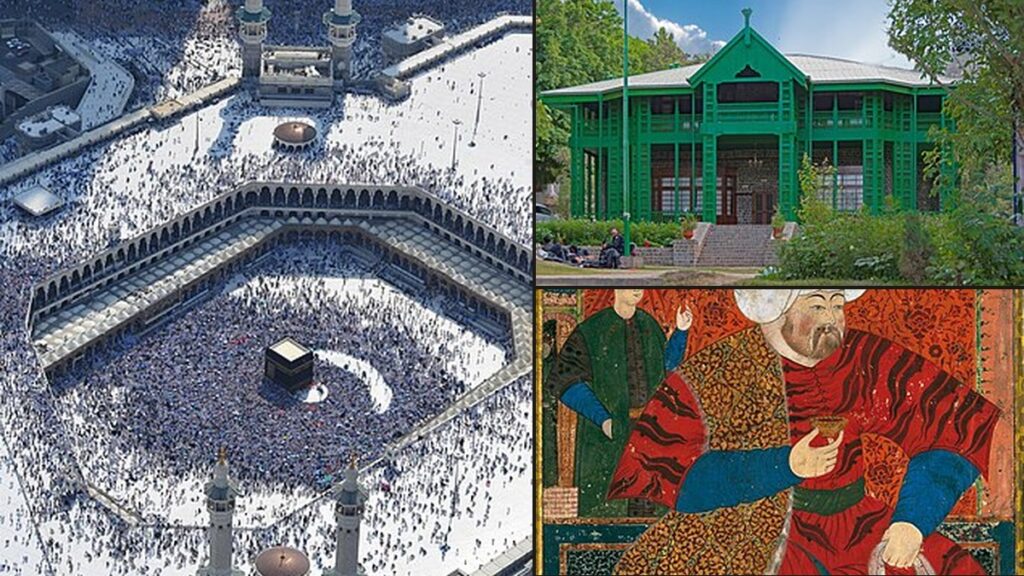
For the 2015 Hajj stampede:
– September 2015
– Mina, Saudi Arabia
– Crowd crush/stampede
– Many deaths
Let me write this all out in fluent, rich Turkish.
I’ll write the article now.